Svyatki doors

A new door opens every day from 31 December to 18 January. Tap an open door to see its film and dish.

Behind the doors

Every open door: one Soviet holiday classic and one Slavic dish for that day of the winter feasts.

1
Door 131 December New Year's Eve
Poster: The Irony of Fate
Film of the day

The Irony of Fate 1975

Ирония судьбы, или С лёгким паром!Eldar Ryazanov · USSR

After a New Year's Eve banya with friends, Zhenya is put on a plane to Leningrad by mistake. He finds the same street, the same block, a flat his key opens, and Nadya living in it. Shown on TV every New Year since 1 January 1976.

Find on IMDb →
A bowl of Olivier salad with diced potato, carrot, egg, pickles, peas and sausage in mayonnaise
Dish of the day · Salads

Olivier Salad

The salad is named after Lucien Olivier, a chef of French or Belgian origin who ran the Hermitage restaurant in Moscow in the 1860s. His version was a luxury dish of hazel grouse, crayfish tails,…

Open the recipe ↓
2
Door 21 January New Year
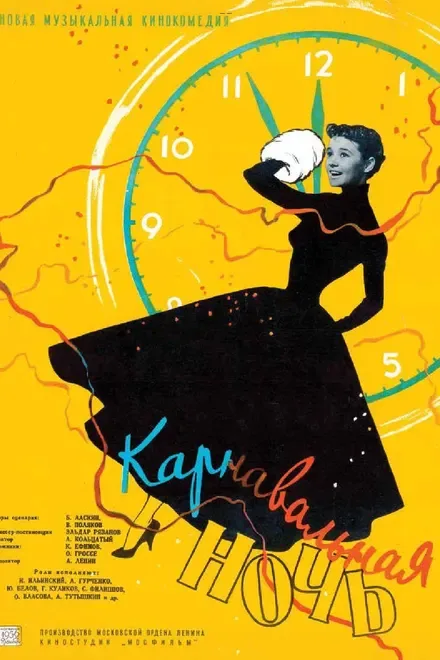
Poster: Carnival Night
Film of the day

Carnival Night 1956

Карнавальная ночьEldar Ryazanov · USSR

A House of Culture gets ready for its New Year's ball, but the pompous new director Ogurtsov wants lectures instead of jazz. Lyudmila Gurchenko's breakthrough, and the song «Five Minutes».

Find on IMDb →
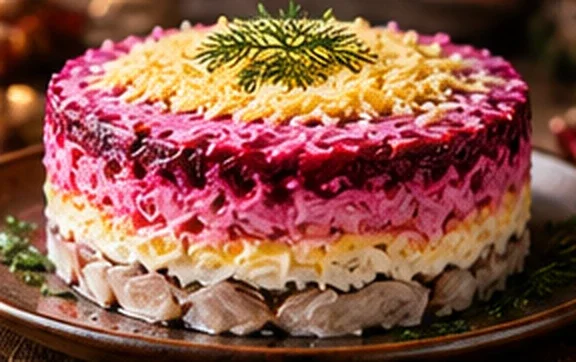
A layered salad of herring, potato, carrot, egg and grated beetroot topped with deep purple beetroot
Dish of the day · Salads

Herring under a Fur Coat

Selyodka pod shuboy layers salted herring under potato, carrot, egg and beetroot, and the purple beetroot on top is the “fur coat”. It became a fixture of the Soviet New Year table in the 1960s and…

Open the recipe ↓
3
Door 32 January
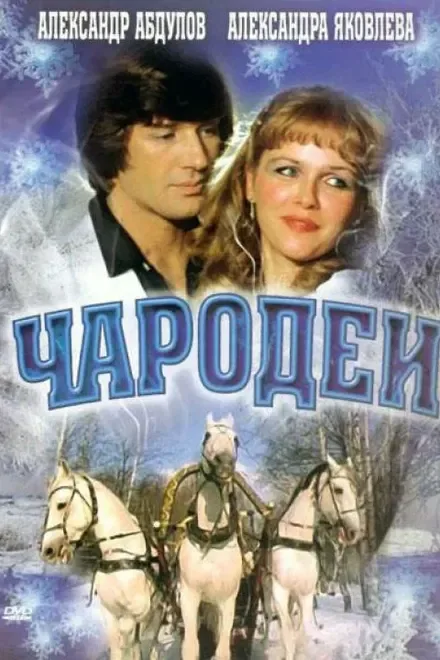
Poster: The Magicians
Film of the day

The Magicians 1982

ЧародеиKonstantin Bromberg · USSR

New Year's Eve at a Moscow institute of magic. A jealous rival turns the young witch Alyona cold-hearted, and her fiancé has until midnight to break the spell. A musical loosely based on the Strugatskys.

Find on IMDb →
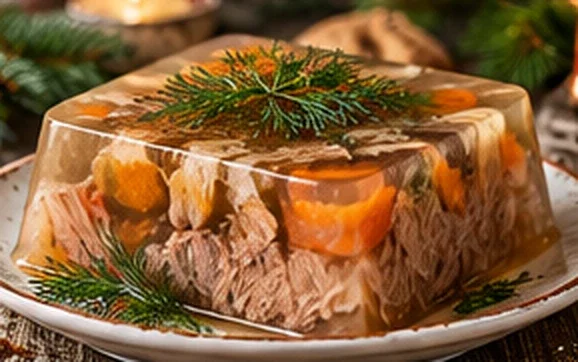
Slices of clear kholodets with pieces of meat, carrot and garlic set in the jelly, served with horseradish and mustard
Dish of the day · Main Dishes

Kholodets: Meat in Aspic

Kholodets (also called studen) is broth from pork knuckles and beef that sets into a jelly by itself, with no gelatine: the collagen in the bones and skin does the work. It was made in winter, after…

Open the recipe ↓
4
Door 43 January
Poster: Ivan Vasilievich Changes Profession
Film of the day

Ivan Vasilievich Changes Profession 1973

Иван Васильевич меняет профессиюLeonid Gaidai · USSR

An inventor's time machine swaps Ivan the Terrible with a fussy building manager, who now has to rule 16th-century Moscow. A favourite holiday-TV comedy.

Find on IMDb →
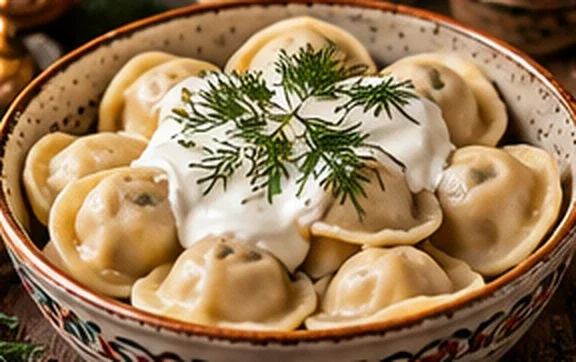
A plate of small boiled pelmeni dumplings with melted butter, sour cream and black pepper
Dish of the day · Main Dishes

Siberian Pelmeni

Pelmeni come from the Urals and Siberia, and the name is usually traced to the Komi and Udmurt word pelnyan, “bread ear”, for the shape. Families made them by the hundred before winter, froze them…

Open the recipe ↓
5
Door 54 January
Poster: The Diamond Arm
Film of the day

The Diamond Arm 1968

Бриллиантовая рукаLeonid Gaidai · USSR

A meek economist comes home from a cruise with smuggled diamonds hidden in the plaster cast on his arm, and the smugglers want them back. With Yuri Nikulin and Andrei Mironov.

Find on IMDb →
Clay mugs of steaming amber sbiten with cinnamon sticks, cloves and a jar of honey
Dish of the day · Drinks

Sbiten: Hot Honey and Spice Drink

Sbiten is honey brewed in hot water with spices and herbs. It was written about as early as the 12th century and was the everyday hot drink of Russian towns long before tea arrived from China in the…

Open the recipe ↓
6
Door 65 January
Poster: Morozko
Film of the day

Morozko 1964

МорозкоAleksandr Rou · USSR

A kind stepdaughter is left in the frozen forest, where Grandfather Frost tests her. A boastful young man is cursed with a bear's head, and Baba Yaga gets in the way.

Find on IMDb →
A glass jug of dark amber uzvar with smoked dried pears, apples and prunes
Dish of the day · Drinks

Uzvar: Smoked Dried Fruit Drink

Uzvar (Russian vzvar, “the brewed”) is a drink of dried fruit, best of all smoked pears and apples dried over the stove, which give it a deep, smoky taste. It is brewed a day ahead for Christmas Eve…

Open the recipe ↓
7
Door 76 January Sochelnik
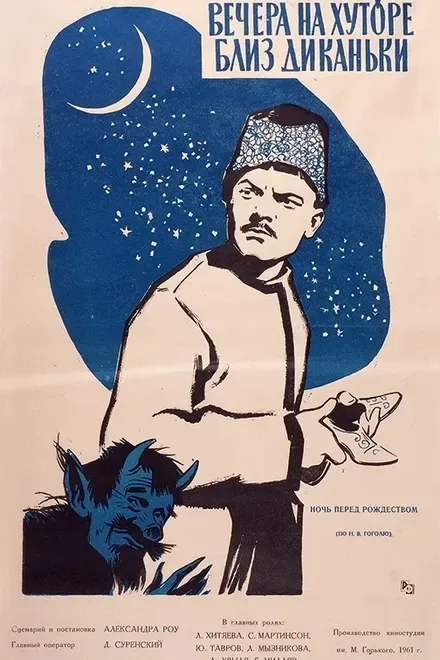
Poster: The Night Before Christmas
Film of the day

The Night Before Christmas 1961

Вечера на хуторе близ ДиканькиAleksandr Rou · USSR

Gogol's Christmas Eve: a devil steals the moon, and the blacksmith Vakula rides him to St Petersburg to fetch the Tsarina's slippers for the proud Oksana. The film for Sochelnik.

Find on IMDb →
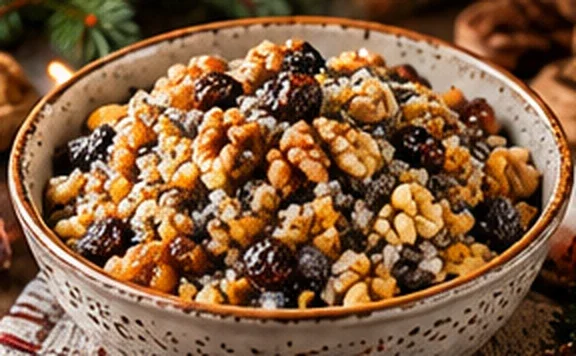
A clay bowl of kutia: whole wheat berries with poppy seeds, honey, walnuts and raisins
Dish of the day · Desserts & Bakery

Kutia (Sochivo): Christmas Eve Wheat

On 6 January, Orthodox Christmas Eve, families fast all day until the first star appears in the sky, in memory of the Star of Bethlehem. The first dish of the evening is kutia: whole wheat, poppy…

Open the recipe ↓
8
Door 87 January Christmas
Poster: An Ordinary Miracle
Film of the day

An Ordinary Miracle 1978

Обыкновенное чудоMark Zakharov · USSR

A wizard turns a bear into a young man, who will become a bear again if a princess kisses him. With Oleg Yankovsky, Alexander Abdulov and Yevgeny Leonov. First shown on New Year's Day 1979.

Find on IMDb →
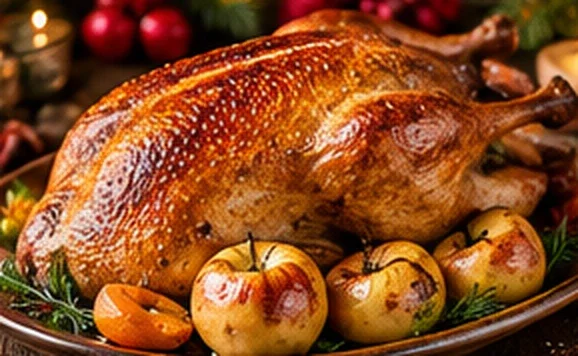
A golden roast goose on a platter surrounded by baked red and green apples
Dish of the day · Main Dishes

Roast Goose with Apples

Orthodox Christmas on 7 January ends the 40-day Nativity fast, so after the meatless Christmas Eve the Christmas table turns rich. A goose stuffed with sour Antonovka apples and roasted slowly in the…

Open the recipe ↓
9
Door 98 January
Poster: Gentlemen of Fortune
Film of the day

Gentlemen of Fortune 1971

Джентльмены удачиAleksandr Seryy · USSR

A gentle kindergarten head looks exactly like a thief called Docent, so the police put him in prison to find a stolen helmet of Alexander the Great. Yevgeny Leonov in both roles.

Find on IMDb →
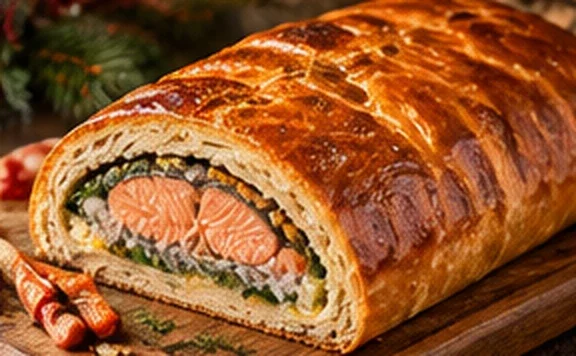
A long golden kulebyaka pie cut open to show layers of salmon, rice, mushrooms, egg and thin pancakes
Dish of the day · Main Dishes

Kulebyaka: Layered Fish Pie

Kulebyaka is a long closed pie in which several fillings are stacked in layers and kept apart by thin bliny. It was the pride of the 19th-century Russian table, served on holidays and name days.

Open the recipe ↓
10
Door 109 January
Poster: Operation Y and Shurik's Other Adventures
Film of the day

Operation Y and Shurik's Other Adventures 1965

Операция «Ы» и другие приключения ШурикаLeonid Gaidai · USSR

Three short stories about the student Shurik: a fight with a bully on a building site, an exam learned from a classmate's notes, and a fake warehouse robbery.

Find on IMDb →
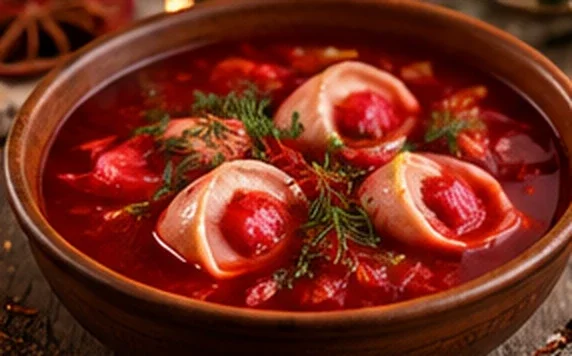
A bowl of clear ruby red beetroot broth with small mushroom-filled dumplings and dill
Dish of the day · Soups & Stews

Clear Borscht with Ushki

In Ukraine and Poland the Christmas Eve supper has twelve meatless dishes, one for each apostle, and it often begins with clear red borscht. It is a lenten soup with no meat or dairy: just beetroot,…

Open the recipe ↓
11
Door 1110 January
Poster: Kidnapping, Caucasian Style
Film of the day

Kidnapping, Caucasian Style 1967

Кавказская пленницаLeonid Gaidai · USSR

Shurik goes to the Caucasus to collect folk toasts and gets talked into helping with a bride 'kidnapping', not knowing the bride hasn't agreed to it.

Find on IMDb →
Dark gingerbread biscuits shaped as deer and goats, painted with fine white icing patterns
Dish of the day · Desserts & Bakery

Kozuli: Pomor Christmas Gingerbread

Kozuli are the Christmas gingerbread of the Pomors, the Russians of the White Sea coast around Arkhangelsk. They are made from rye and wheat flour with a dark burnt-sugar syrup and shaped as deer,…

Open the recipe ↓
12
Door 1211 January
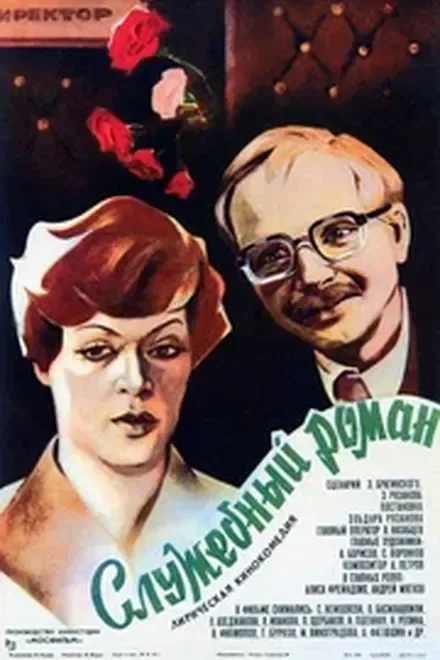
Poster: Office Romance
Film of the day

Office Romance 1977

Служебный романEldar Ryazanov · USSR

A shy statistician is told to court his stern boss to get a promotion, and it stops being a plan. With Alisa Freindlich and Andrei Myagkov.

Find on IMDb →
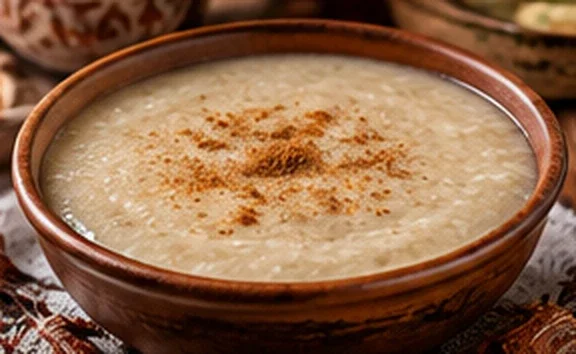
A firm pale oat kisel cut into squares, drizzled with honey and flax oil
Dish of the day · Desserts & Bakery

Oat Kisel

Oat kisel is the oldest Russian dessert: oats left to sour in water, then cooked until the liquid thickens and sets. The Primary Chronicle tells that in 997 the town of Belgorod, besieged by the…

Open the recipe ↓
13
Door 1312 January
Poster: Winter in Prostokvashino
Film of the day

Winter in Prostokvashino 1984

Зима в ПростоквашиноVladimir Popov · USSR

Uncle Fyodor, Matroskin and Sharik see in the New Year in the village while Mum and Dad argue over where to spend it. A 20-minute cartoon that is on TV every 31 December.

Find on IMDb →
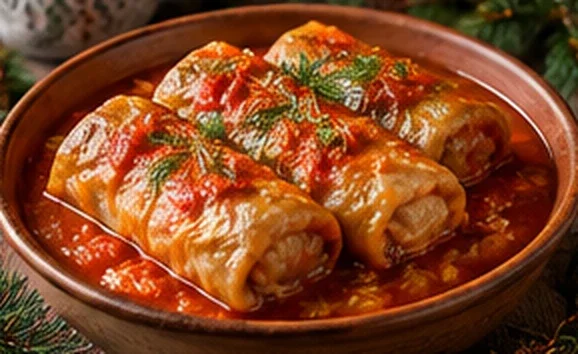
Small cabbage rolls stuffed with buckwheat and mushrooms, baked in a clay dish with tomato sauce
Dish of the day · Main Dishes

Lenten Holubtsi with Buckwheat and Mushrooms

Holubtsi, “little doves”, are cabbage rolls. On Christmas Eve they are made without meat, with buckwheat or millet and dried forest mushrooms, because the Holy Supper is the last meal of the Nativity fast.

Open the recipe ↓
14
Door 1413 January Vasilyev Eve
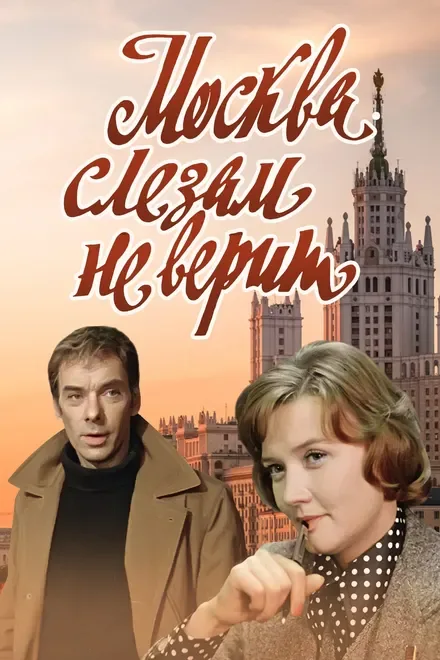
Poster: Moscow Does Not Believe in Tears
Film of the day

Moscow Does Not Believe in Tears 1979

Москва слезам не веритVladimir Menshov · USSR

Three young women arrive in 1950s Moscow. Twenty years later one runs a factory and meets Gosha on a suburban train. It won the Oscar for Best Foreign Language Film in 1981.

Find on IMDb →
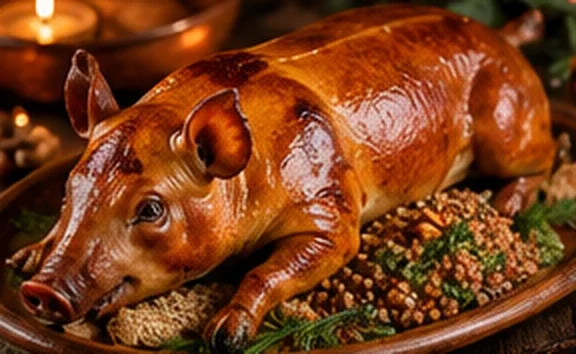
A whole golden roast suckling piglet on a platter, stuffed with buckwheat and mushrooms
Dish of the day · Main Dishes

Roast Piglet with Buckwheat

The evening of 13 January, the eve of the Old New Year, is Vasilyev vecher, the eve of Saint Basil. In folk belief Saint Basil looked after pigs, so on this generous evening a roast piglet stood at…

Open the recipe ↓
15
Door 1514 January Old New Year
Poster: Old New Year
Film of the day

Old New Year 1980

Старый Новый годNaum Birman, Oleg Yefremov · USSR

Two families in one new apartment block celebrate the night of 13 January. One man throws out everything he owns while his neighbour can't stop buying. Based on Mikhail Roshchin's play.

Find on IMDb →
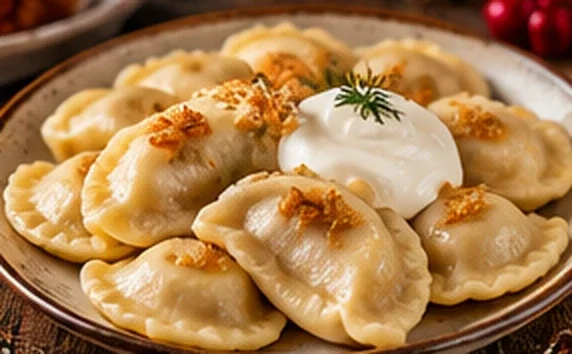
A plate of potato vareniki with fried onion and sour cream, one broken open to show a coin inside
Dish of the day · Main Dishes

Fortune Vareniki for Old New Year

On the night of Old New Year, 13–14 January, families in Ukraine and Russia hide surprises in a few vareniki. A coin means money, a ring a wedding, salt tears, a peppercorn a fiery year, thread a…

Open the recipe ↓
16
Door 1615 January
Poster: The Snow Queen
Film of the day

The Snow Queen 1957

Снежная королеваLev Atamanov · USSR

Gerda walks across frozen lands to rescue Kai from the Snow Queen's palace, where a splinter of ice has turned his heart cold. The Soyuzmultfilm classic of Andersen's tale.

Find on IMDb →
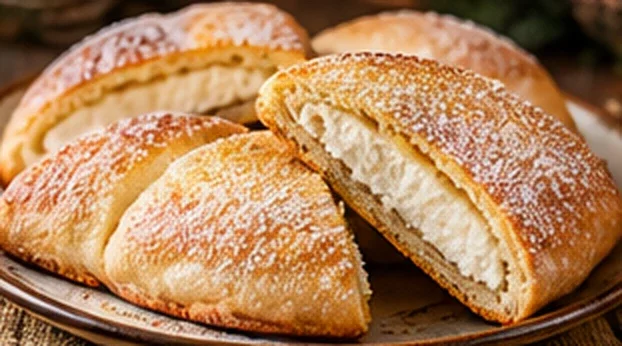
Golden half-moon pastries folded over a sweet curd cheese filling that peeks out of the open side
Dish of the day · Desserts & Bakery

Sochni: Sweet Curd Pastries

Sochni (also sochniki) are open half-moon pastries of soft sour-cream dough folded over sweet curd cheese. They were baked for Svyatki, when groups of young people went from house to house singing kolyadki.

Open the recipe ↓
17
Door 1716 January
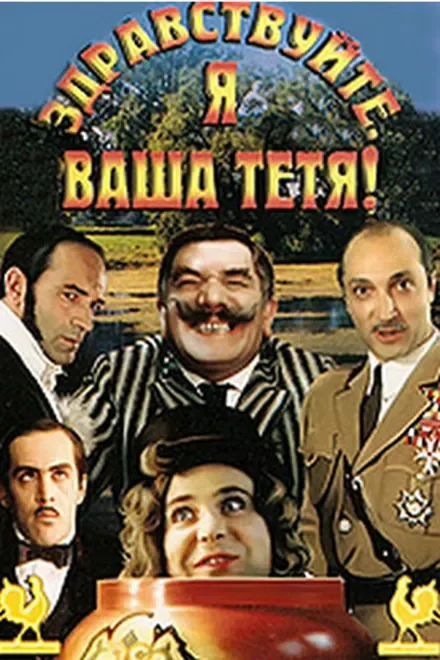
Poster: Hello, I'm Your Aunt!
Film of the day

Hello, I'm Your Aunt! 1975

Здравствуйте, я ваша тётя!Viktor Titov · USSR

A tramp hiding from the police dresses up as a rich aunt from Brazil and is taken in by a judge. Alexander Kalyagin's famous comedy, and a holiday-TV favourite.

Find on IMDb →
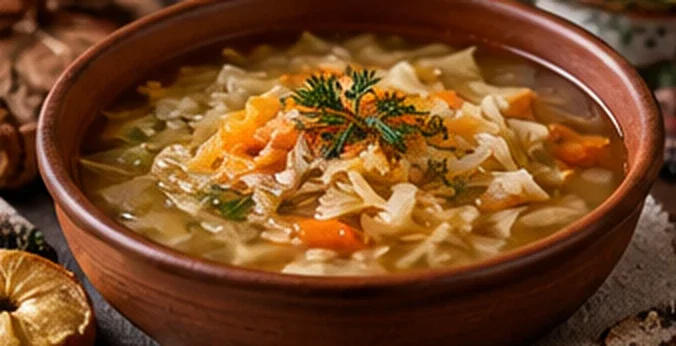
A clay pot of dark sauerkraut soup with beef, served with sour cream and rye bread
Dish of the day · Soups & Stews

Sutochnye Shchi: Day-Old Sauerkraut Soup

Shchi, cabbage soup, is the oldest Russian soup, and sutochnye shchi, “day-old shchi”, is its winter best: sauerkraut soup that sat in the cooling Russian stove for a whole day until it became thick…

Open the recipe ↓
18
Door 1817 January
Poster: That Very Munchausen
Film of the day

That Very Munchausen 1979

Тот самый МюнхгаузенMark Zakharov · USSR

Baron Munchausen tells the truth too often for the town, so they declare him dead. With Oleg Yankovsky; first shown on New Year's Day 1980.

Find on IMDb →
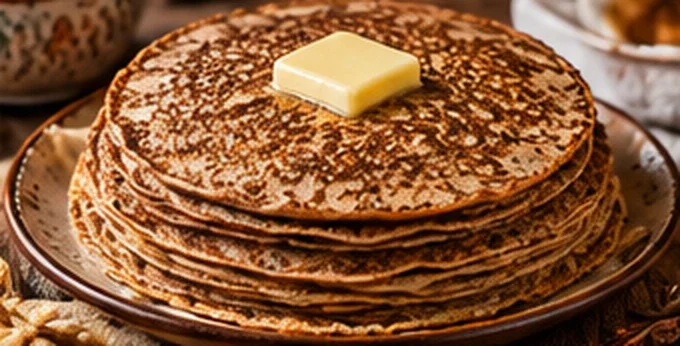
A stack of lacy grey-brown buckwheat pancakes with sour cream and red caviar
Dish of the day · Desserts & Bakery

Yeasted Buckwheat Bliny

Yeasted buckwheat bliny are older than the wheat kind and were once the everyday Russian pancake, grey, lacy and slightly sour. They were part of every big winter feast, from Christmas to Maslenitsa.

Open the recipe ↓
19
Door 1918 January Epiphany Eve
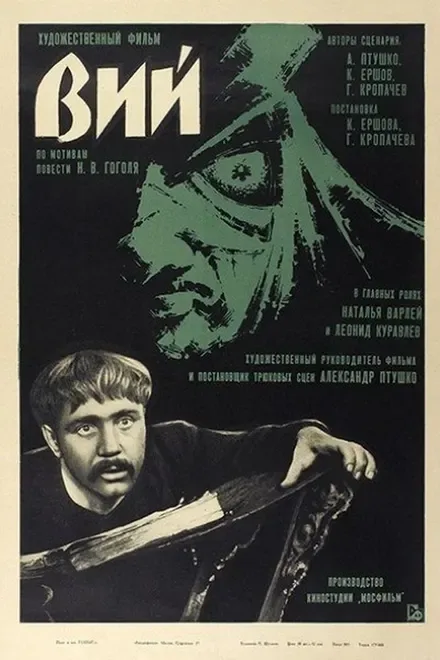
Poster: Viy
Film of the day

Viy 1967

ВийKonstantin Yershov, Georgi Kropachyov · USSR

A seminary student must read prayers over a dead witch for three nights in a village church. Gogol's tale for the last night of Svyatki, when fortune-telling was said to be strongest.

Find on IMDb →
A bowl of rice kutia with raisins, dried apricots, poppy seeds and honey
Dish of the day · Desserts & Bakery

Hungry Kutia for Epiphany Eve

18 January is Kreshchensky Sochelnik, Epiphany Eve, the last day of Svyatki. It is a strict fast day, and the evening meal is the third and last kutia of the season, called “hungry” or “lean” kutia…

Open the recipe ↓

The Svyatki recipes

Full recipes with ingredients, timed steps and the story behind each dish. They appear here as their doors open.

A bowl of Olivier salad with diced potato, carrot, egg, pickles, peas and sausage in mayonnaise
Estimate: ~380 kcal per serving (6 servings)

Olivier Salad

  • Prep30 min
  • Cook30 min + 1 h to chill
  • Makes6 servings
  • Door31 December

1. Boil the vegetables: Boil the potatoes and carrots whole, in their skins, for 25 minutes, until a knife goes in easily. Boil the eggs for 10 minutes, then cool everything completely.
2. Peel: Peel the potatoes, carrots and eggs. Everything must be cold, or the salad turns mushy.
3. Dice small: Cut the potatoes, carrots, eggs, pickled cucumbers and sausage into neat cubes the size of a pea.
4. Combine: Put everything in a large bowl with the drained peas and the chopped spring onion.
5. Dress: Fold in the mayonnaise, season with salt and pepper and a spoonful of the pickle brine if you like it sharper.
6. Chill: Cover and chill for 1 hour before serving. Dress only what you will eat that night: it keeps better undressed.

From the Hermitage restaurant to every New Year table

History & Origins

The salad is named after Lucien Olivier, a chef of French or Belgian origin who ran the Hermitage restaurant in Moscow in the 1860s. His version was a luxury dish of hazel grouse, crayfish tails, capers, truffles and a secret Provençal dressing, and he took the exact recipe to his grave.

In Soviet times the salad was rebuilt from what a shop could sell: boiled sausage (or beef), potatoes, pickles, tinned peas and mayonnaise. A big bowl of it became as much a part of 31 December as the Kremlin chimes, and in many homes the New Year's Eve cooking starts with peeling the vegetables for Olivier.

A layered salad of herring, potato, carrot, egg and grated beetroot topped with deep purple beetroot
Estimate: ~320 kcal per serving (8 servings)

Herring under a Fur Coat

  • Prep30 min
  • Cook40 min + 3 h to set
  • Makes8 servings
  • Door1 January

1. Cook the vegetables: Boil the beetroot for 40 minutes and the potatoes and carrots for 25 minutes, all whole and in their skins. Boil the eggs for 10 minutes. Cool everything.
2. Prepare the herring: Fillet the herring, pull out the bones and cut it into small cubes. Chop the onion very finely.
3. Grate: Peel and coarsely grate the potatoes, carrots, eggs and beetroot, each into its own bowl.
4. Layer: On a flat dish, spread layers in this order: potato, herring and onion, carrot, egg, beetroot. Spread a thin coat of mayonnaise over each layer.
5. Finish the coat: Cover the top and sides with the last of the beetroot and a final thin layer of mayonnaise, smoothing it like a fur coat.
6. Let it set: Chill for at least 3 hours, or overnight, so the layers soak and hold together when sliced.

The beetroot fur coat

History & Origins

Selyodka pod shuboy layers salted herring under potato, carrot, egg and beetroot, and the purple beetroot on top is the “fur coat”. It became a fixture of the Soviet New Year table in the 1960s and 70s, next to Olivier.

A popular story says a Moscow tavern owner invented it in 1918 and named it with an acronym of revolutionary slogans. It is a good tale, but there is no record of it. Salted herring with potatoes and beetroot, though, was everyday food all around the Baltic for centuries.

Slices of clear kholodets with pieces of meat, carrot and garlic set in the jelly, served with horseradish and mustard
Estimate: ~230 kcal per serving (10 servings)

Kholodets: Meat in Aspic

  • Prep30 min
  • Cook6 h + 8 h to set
  • Makes10 servings
  • Door2 January

1. Soak and blanch: Soak the pork knuckles in cold water for 2 hours. Bring them to the boil with the beef in fresh water, boil for 5 minutes, then drain and rinse. This keeps the broth clear.
2. Simmer slowly: Cover the meat with 4 litres of cold water and bring to the barest simmer. Cook uncovered for 6 hours, skimming now and then. Never let it boil hard.
3. Add the vegetables: For the last hour, add the whole onion, the carrot, the bay leaves and the peppercorns, and season with salt.
4. Pick the meat: Lift out the meat, take it off the bones and tear it into small pieces. Strain the broth through a fine sieve or cloth.
5. Fill the moulds: Spread the meat, slices of carrot and the crushed garlic in shallow dishes and pour the hot broth over them.
6. Let it set: Leave to cool, then put in the fridge for 8 hours, until firm. Scrape off the fat on top and serve cold with horseradish and mustard.

Food made by the cold

History & Origins

Kholodets (also called studen) is broth from pork knuckles and beef that sets into a jelly by itself, with no gelatine: the collagen in the bones and skin does the work. It was made in winter, after the animals were slaughtered, and left to set in the cold store or simply in the porch.

It belongs on the New Year and Christmas table in Russia, Ukraine and Belarus, always served cold with sharp horseradish or mustard. The long, quiet simmer is the secret: a broth that boils hard turns cloudy.

A plate of small boiled pelmeni dumplings with melted butter, sour cream and black pepper
Estimate: ~480 kcal per serving (6 servings)

Siberian Pelmeni

  • Prep1 h 15 min
  • Cook8 min
  • Makes6 servings
  • Door3 January

1. Make the dough: Mix the flour, egg, salt and cold water and knead for 10 minutes into a smooth, firm dough. Cover and rest for 30 minutes.
2. Make the filling: Mix the minced pork and beef with the grated onion, salt, pepper and 3 tbsp of ice water, until the mixture is soft and sticky.
3. Roll and cut: Roll the dough very thin, about 1.5 mm, and cut circles 5 cm across with a glass.
4. Shape: Put half a teaspoon of filling on each circle, fold it in half, pinch the edge closed, then join the two corners around your finger.
5. Freeze or cook: Freeze them on a floured tray if you are making a big batch. To cook, drop them into well-salted boiling water with a bay leaf and boil for 8 minutes after they float.
6. Serve: Serve with melted butter, sour cream and black pepper, or with vinegar as in Siberia.

Dumplings frozen by the sackful

History & Origins

Pelmeni come from the Urals and Siberia, and the name is usually traced to the Komi and Udmurt word pelnyan, “bread ear”, for the shape. Families made them by the hundred before winter, froze them outside and stored them in sacks, ready to cook in minutes on the road or in the cold months.

Making pelmeni together on the days before New Year is still a family job in many homes, and some cooks hide one with a peppercorn or a coin inside for luck.

Clay mugs of steaming amber sbiten with cinnamon sticks, cloves and a jar of honey
Estimate: ~110 kcal per cup (6 cups)

Sbiten: Hot Honey and Spice Drink

  • Prep5 min
  • Cook20 min
  • Makes6 cups
  • Door4 January

1. Melt the honey: Warm the honey with 250 ml of the water in a pan until it dissolves, then bring to a gentle boil.
2. Skim: Simmer for 5 minutes, skimming off the foam that rises.
3. Add the spices: Add the rest of the water, the cloves, cinnamon stick, sliced ginger, bay leaf and peppercorns.
4. Brew: Simmer gently for 15 minutes, with a lid, so the spices give up their flavour.
5. Add the mint: Take off the heat, add the mint and leave for 5 minutes.
6. Serve hot: Strain into mugs and drink very hot, as the street sellers sold it in the frost.

Russia's winter drink before tea

History & Origins

Sbiten is honey brewed in hot water with spices and herbs. It was written about as early as the 12th century and was the everyday hot drink of Russian towns long before tea arrived from China in the 17th century.

Street sellers, the sbitenshchiki, carried it in copper urns wrapped in cloth to keep it hot and poured it for passers-by at fairs and markets, especially during the winter holidays. The samovar is said to have grown out of the sbiten urn.

A glass jug of dark amber uzvar with smoked dried pears, apples and prunes
Estimate: ~90 kcal per glass (8 glasses)

Uzvar: Smoked Dried Fruit Drink

  • Prep10 min
  • Cook25 min + 4 h to infuse
  • Makes8 glasses
  • Door5 January

1. Rinse the fruit: Rinse the dried pears, apples, prunes and raisins in warm water, rubbing off any dust.
2. Start with the hard fruit: Put the pears and apples in 2.5 litres of cold water and bring to the boil. They are the hardest, so they go in first.
3. Add the rest: After 15 minutes, add the prunes and raisins and simmer for 10 minutes more.
4. Infuse: Take off the heat, cover and leave for at least 4 hours, or overnight. Uzvar is always made ahead.
5. Sweeten: Stir in the honey once the drink is warm, not hot, so the honey keeps its flavour.
6. Serve: Serve cool or at room temperature with kutia, and eat the soft fruit with a spoon.

The drink brewed for Sochelnik

History & Origins

Uzvar (Russian vzvar, “the brewed”) is a drink of dried fruit, best of all smoked pears and apples dried over the stove, which give it a deep, smoky taste. It is brewed a day ahead for Christmas Eve and stands on the table next to the kutia.

In Ukraine kutia and uzvar are called the “pair” of the Holy Supper. In some villages a cup of uzvar and a spoon of kutia were left out overnight for the souls of the family's ancestors.

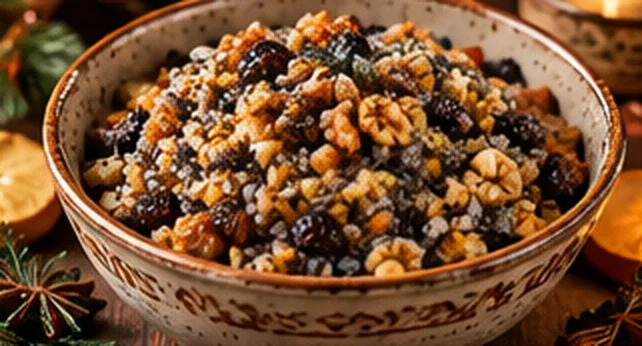
A clay bowl of kutia: whole wheat berries with poppy seeds, honey, walnuts and raisins
Estimate: ~310 kcal per serving (8 servings)

Kutia (Sochivo): Christmas Eve Wheat

  • Prep20 min
  • Cook1 h + overnight soak
  • Makes8 servings
  • Door6 January

1. Soak the wheat: Rinse the wheat berries and soak them overnight in cold water.
2. Cook the wheat: Drain, cover with fresh water and simmer for 1 hour, until soft but still whole. Drain and cool.
3. Prepare the poppy seeds: Pour boiling water over the poppy seeds and leave for 30 minutes. Drain, then grind them with a pestle or blender until white 'milk' appears.
4. Toast the nuts: Toast the walnuts in a dry pan for 4 minutes and chop them roughly. Soak the raisins in warm water for 10 minutes.
5. Mix: Stir the honey into a few spoonfuls of uzvar or warm water, then mix it with the wheat, poppy, nuts and raisins.
6. Serve: Kutia should be loose, not dry. Serve it first, when the first star appears on the evening of 6 January.

The first dish of Christmas Eve

History & Origins

On 6 January, Orthodox Christmas Eve, families fast all day until the first star appears in the sky, in memory of the Star of Bethlehem. The first dish of the evening is kutia: whole wheat, poppy seed and honey. The name of the evening, Sochelnik, comes from sochivo, the old word for this dish.

Wheat stands for life and rebirth, poppy for plenty and honey for a sweet year. Kutia is eaten three times in the season: on Christmas Eve, the rich kutia on Vasilyev Eve (13 January) and the “hungry” kutia before Epiphany.

A golden roast goose on a platter surrounded by baked red and green apples
Estimate: ~640 kcal per serving (8 servings)

Roast Goose with Apples

  • Prep30 min
  • Cook3 h
  • Makes8 servings
  • Door7 January

1. Prepare the goose: Pull the loose fat from inside the goose, cut off the wing tips and prick the skin all over with a needle, without piercing the meat. Pat it dry.
2. Season: Rub the goose inside and out with salt, pepper and the dried marjoram.
3. Stuff: Quarter and core the sour apples and pack them inside the goose. Close the opening with a skewer.
4. Roast: Heat the oven to 180 °C. Roast the goose breast-down on a rack for 1 hour, then turn it breast-up and roast for 2 hours more, spooning off the fat every 30 minutes.
5. Glaze: For the last 15 minutes, brush the skin with honey mixed with a spoonful of hot water, and put the extra apples around it.
6. Rest and carve: Rest for 20 minutes before carving. Serve with the soft apples from inside, and keep the goose fat for roast potatoes.

The feast after the fast

History & Origins

Orthodox Christmas on 7 January ends the 40-day Nativity fast, so after the meatless Christmas Eve the Christmas table turns rich. A goose stuffed with sour Antonovka apples and roasted slowly in the Russian stove was the centrepiece in well-off homes.

The apples soak up the fat and keep the goose from tasting heavy. Antonovka is an old Russian winter apple, very sharp and aromatic; any sour cooking apple works.

A long golden kulebyaka pie cut open to show layers of salmon, rice, mushrooms, egg and thin pancakes
Estimate: ~520 kcal per slice (10 slices)

Kulebyaka: Layered Fish Pie

  • Prep1 h 30 min
  • Cook50 min + 1 h 30 min dough rise
  • Makes10 slices
  • Door8 January

1. Make the dough: Mix the flour, warm milk, yeast, sugar, egg, salt and soft butter into a soft dough. Knead for 10 minutes, cover and leave to rise for 1 hour 30 minutes.
2. Cook the fillings: Boil the rice for 15 minutes and drain. Fry the sliced mushrooms and onion in butter for 10 minutes. Hard-boil and chop the eggs and mix them with dill.
3. Poach the fish: Poach the salmon in salted water for 5 minutes, then flake it into large pieces.
4. Layer: Roll two thirds of the dough into a long rectangle. Lay a blin on it, then rice, a blin, fish, a blin, mushrooms, a blin, egg. Thin bliny keep each layer apart.
5. Close and decorate: Wrap the dough over the filling and seal it. Cover the seam with strips and leaves cut from the rest of the dough, brush with egg and cut a steam hole.
6. Bake: Bake at 190 °C for 50 minutes, until deep golden. Brush with melted butter and rest for 15 minutes before slicing.

A pie with four corners

History & Origins

Kulebyaka is a long closed pie in which several fillings are stacked in layers and kept apart by thin bliny. It was the pride of the 19th-century Russian table, served on holidays and name days.

In Gogol's Dead Souls (1842) the landowner Petukh orders a kulebyaka with a different filling in each corner: sturgeon cheeks and gristle in one, buckwheat, mushrooms and onion in another, milt and brains in a third. Fish kulebyaka was also the festive pie of the fast days before Christmas.

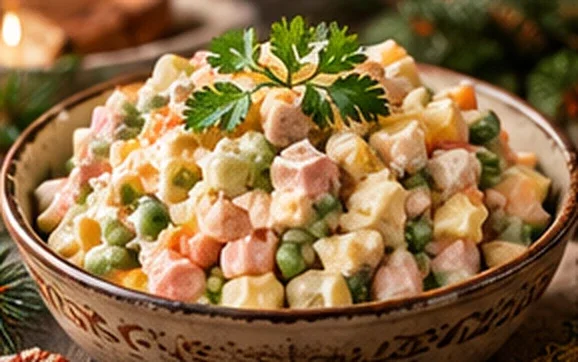
A bowl of clear ruby red beetroot broth with small mushroom-filled dumplings and dill
Estimate: ~210 kcal per serving (6 servings)

Clear Borscht with Ushki

  • Prep1 h
  • Cook1 h
  • Makes6 servings
  • Door9 January

1. Soak the mushrooms: Soak the dried porcini in 500 ml warm water for 1 hour. Lift them out, chop them finely and keep the soaking water.
2. Make the broth: Peel and slice the beetroot and put it in a pan with 2 litres of water, the mushroom water, the bay leaf and allspice. Simmer gently for 45 minutes.
3. Make the filling: Fry the onion in oil for 8 minutes until golden, add the chopped mushrooms and cook for 5 minutes more. Season well.
4. Shape the ushki: Roll the dough thin and cut 4 cm squares. Put a little filling on each, fold into a triangle, then pinch the two corners together into a 'little ear'.
5. Finish the broth: Strain the broth, add the crushed garlic, salt, sugar and lemon juice until it tastes bright and sweet-sour. It should be clear and ruby red.
6. Cook and serve: Boil the ushki in salted water for 4 minutes after they float. Put a few in each bowl and pour the hot broth over them, with dill.

The first course of the Holy Supper

History & Origins

In Ukraine and Poland the Christmas Eve supper has twelve meatless dishes, one for each apostle, and it often begins with clear red borscht. It is a lenten soup with no meat or dairy: just beetroot, dried mushrooms and a sharp sweet-sour taste.

The tiny mushroom dumplings floating in it are called ushki, “little ears” (in Polish uszka). They take time to make, which is why families shape them together in the afternoon of Christmas Eve.

Dark gingerbread biscuits shaped as deer and goats, painted with fine white icing patterns
Estimate: ~140 kcal per biscuit (20 biscuits)

Kozuli: Pomor Christmas Gingerbread

  • Prep1 h
  • Cook10 min + dough rests overnight
  • Makes20 biscuits
  • Door10 January

1. Make the burnt sugar: Melt 100 g of the sugar in a dry pan and cook until dark amber. Carefully pour in 100 ml boiling water and stir until smooth. Add the rest of the sugar and the butter.
2. Mix the dough: When the syrup is warm, stir in the spices, eggs, baking soda and both flours, and knead into a stiff dough.
3. Rest: Wrap the dough and leave it in a cool place overnight. It becomes easier to shape and the flavour deepens.
4. Shape: Roll the dough 5 mm thick and cut or model deer, goats and birds. Pomor cooks shaped them by hand from rolls of dough.
5. Bake: Bake at 200 °C for 10 minutes, until set. They will darken a little more as they cool.
6. Paint: Whisk the egg white with the icing sugar until thick and white, and pipe fine lines, dots and patterns on the cold biscuits. Leave to dry.

Gingerbread deer for the carolers

History & Origins

Kozuli are the Christmas gingerbread of the Pomors, the Russians of the White Sea coast around Arkhangelsk. They are made from rye and wheat flour with a dark burnt-sugar syrup and shaped as deer, goats, cows and birds, then painted with white icing.

The name comes from koza, “goat”, an old symbol of a rich harvest in the north. Kozuli were baked for Christmas, hung by the window and given to the carolers who went from house to house during Svyatki. Kept in a dry place, they last for months.

A firm pale oat kisel cut into squares, drizzled with honey and flax oil
Estimate: ~150 kcal per serving (6 servings)

Oat Kisel

  • Prep10 min
  • Cook15 min + 12 h to sour
  • Makes6 servings
  • Door11 January

1. Soak the oats: Mix the oats with 1.2 litres of lukewarm water and the rye crust in a large jar. Cover with a cloth.
2. Let it sour: Leave in a warm place for 12 hours, until it smells pleasantly sour, like fresh bread.
3. Strain: Strain through a sieve, pressing the oats hard. Rinse the oats with 300 ml more water and press again. Throw away the oats and crust.
4. Cook: Add the salt and cook the liquid over a medium heat, stirring all the time, for 15 minutes, until it thickens like custard.
5. Set: Pour into a wetted dish and leave to cool. It will set firm enough to cut.
6. Serve: Cut into squares and serve with honey, flax or hemp oil, or warm milk on non-fast days.

The kisel that saved a city

History & Origins

Oat kisel is the oldest Russian dessert: oats left to sour in water, then cooked until the liquid thickens and sets. The Primary Chronicle tells that in 997 the town of Belgorod, besieged by the Pechenegs and starving, was saved by a trick: the townspeople filled one well with kisel and another with honey and showed them to the enemy, who believed the earth itself fed the town and left.

On Christmas Eve, the head of the family would call Frost to come and eat kisel, so that he would leave the spring crops alone.

Small cabbage rolls stuffed with buckwheat and mushrooms, baked in a clay dish with tomato sauce
Estimate: ~260 kcal per serving (6 servings)

Lenten Holubtsi with Buckwheat and Mushrooms

  • Prep45 min
  • Cook1 h 30 min
  • Makes6 servings
  • Door12 January

1. Soften the cabbage: Cut the core out of the cabbage and put the whole head in boiling water for 5 minutes. Peel off the soft outer leaves and repeat until you have 18 leaves. Shave down the thick ribs.
2. Cook the buckwheat: Soak the dried mushrooms in hot water for 30 minutes. Boil the buckwheat in salted water for 10 minutes, so it is half cooked, and drain.
3. Make the filling: Fry the onion and grated carrot in oil for 10 minutes. Add the chopped mushrooms, mix with the buckwheat and season well.
4. Roll: Put a spoonful of filling on each leaf, fold in the sides and roll up tightly.
5. Layer and bake: Line a deep dish with spare cabbage leaves, pack in the rolls and pour over the tomato mixed with the mushroom water. Cover and bake at 170 °C for 1 hour 30 minutes.
6. Serve: Serve hot with some of the cooking juices.

One of the twelve dishes

History & Origins

Holubtsi, “little doves”, are cabbage rolls. On Christmas Eve they are made without meat, with buckwheat or millet and dried forest mushrooms, because the Holy Supper is the last meal of the Nativity fast.

Ukrainian families aim for twelve dishes that evening, and holubtsi, varenyky, borscht, fish, beans, kutia and uzvar are usually among them. Small rolls, the size of a finger, are counted a sign of a skilled cook.

A whole golden roast suckling piglet on a platter, stuffed with buckwheat and mushrooms
Estimate: ~590 kcal per serving (10 servings)

Roast Piglet with Buckwheat

  • Prep40 min
  • Cook3 h
  • Makes10 servings
  • Door13 January

1. Make the stuffing: Toast the buckwheat in a dry pan for 3 minutes, then boil it for 10 minutes and drain. Fry the onion and mushrooms in butter for 10 minutes and mix in.
2. Prepare the piglet: Pat the piglet dry inside and out and rub it with salt. Wrap the ears and tail in foil so they do not burn.
3. Stuff and sew: Fill the belly with the buckwheat and sew or skewer it closed. Lay the piglet on a rack with its legs tucked under, as if lying down.
4. Roast: Roast at 180 °C for 3 hours, brushing the skin with melted butter or oil every 30 minutes.
5. Crisp the skin: Take off the foil for the last 20 minutes and turn the oven up to 220 °C until the skin crackles.
6. Serve: Rest for 20 minutes. Serve on a big platter with horseradish, and carve at the table.

A pig for Vasily's evening

History & Origins

The evening of 13 January, the eve of the Old New Year, is Vasilyev vecher, the eve of Saint Basil. In folk belief Saint Basil looked after pigs, so on this generous evening a roast piglet stood at the centre of the table. An old saying goes: “A pig and a hog for Vasily's evening”.

It was also called the generous evening, Shchedry vecher: carolers went from house to house singing shchedrovki and were paid with pies and pork. A smaller cut, such as a pork shoulder, can be roasted the same way.

A plate of potato vareniki with fried onion and sour cream, one broken open to show a coin inside
Estimate: ~450 kcal per serving (6 servings)

Fortune Vareniki for Old New Year

  • Prep1 h 10 min
  • Cook6 min
  • Makes6 servings
  • Door14 January

1. Make the dough: Mix the flour, kefir, egg and salt into a soft, smooth dough. Cover and rest for 30 minutes.
2. Make the filling: Boil the potatoes for 20 minutes, mash them with butter, and stir in half the fried onion. Season well and cool.
3. Prepare the surprises: Wash the coin and ring well. Get ready a pinch of salt, a peppercorn, a little dough 'ball' and a few other fortunes of your own.
4. Shape: Roll the dough 2 mm thick and cut circles. Fill each with potato, and put a surprise into a few of them. Pinch the edges firmly closed.
5. Cook: Boil in salted water for 6 minutes after they float.
6. Serve and tell fortunes: Serve with the rest of the fried onion and sour cream. Eat carefully: what you bite tells your year.

The first bite tells your year

History & Origins

On the night of Old New Year, 13–14 January, families in Ukraine and Russia hide surprises in a few vareniki. A coin means money, a ring a wedding, salt tears, a peppercorn a fiery year, thread a long road, and a varenyk stuffed with only dough means an empty, easy year.

Svyatki was the time for fortune-telling, and the night before Vasily's day was thought to be one of the strongest. Warn your guests and bite slowly: a coin is lucky, a broken tooth is not.

Golden half-moon pastries folded over a sweet curd cheese filling that peeks out of the open side
Estimate: ~210 kcal per pastry (12 pastries)

Sochni: Sweet Curd Pastries

  • Prep30 min
  • Cook25 min + 30 min to chill
  • Makes12 pastries
  • Door15 January

1. Make the dough: Beat the soft butter with the sugar and sour cream, add the egg (keep a little yolk for brushing), then the flour and baking powder. Knead briefly, wrap and chill for 30 minutes.
2. Make the filling: Mash the tvorog with the sugar, egg, vanilla and semolina until smooth.
3. Roll and cut: Roll the dough 5 mm thick and cut ovals about 12 cm long.
4. Fill: Put a spoonful of filling on one half of each oval and fold the other half over it, without sealing, so the curd shows at the edge.
5. Glaze: Brush the tops with the beaten yolk.
6. Bake: Bake at 190 °C for 25 minutes, until golden. Cool on a rack and dust with icing sugar.

Pastries for the carolers

History & Origins

Sochni (also sochniki) are open half-moon pastries of soft sour-cream dough folded over sweet curd cheese. They were baked for Svyatki, when groups of young people went from house to house singing kolyadki.

The old songs ask the house for treats outright: “Give us a sochen, give us a pie, or we'll take the cow by the horns!” Hosts who gave generously were promised a good year; mean ones were teased in the next verse.

A clay pot of dark sauerkraut soup with beef, served with sour cream and rye bread
Estimate: ~290 kcal per serving (8 servings)

Sutochnye Shchi: Day-Old Sauerkraut Soup

  • Prep30 min
  • Cook3 h + 1 day to mature
  • Makes8 servings
  • Door16 January

1. Make the broth: Cover the brisket with 3 litres of cold water, bring to the boil, skim, and simmer for 2 hours with the bay leaves and peppercorns. Soak the dried mushrooms in hot water.
2. Stew the sauerkraut: Put the sauerkraut in a heavy pot with 2 tbsp fat and a ladle of broth, cover and stew slowly for 1 hour, stirring now and then.
3. Fry the vegetables: Fry the onion and carrot in the rest of the fat for 10 minutes until soft.
4. Combine: Lift out the beef and cut it up. Add the sauerkraut, the vegetables, the chopped mushrooms with their water and the diced potatoes to the broth. Simmer for 30 minutes.
5. Let it rest a day: Put the pot, covered, into an oven at 100 °C for 3 hours, then leave it to cool and stand overnight in a cold place. This is what makes it 'day-old'.
6. Serve: Reheat gently, put the beef back in, and serve with a spoon of sour cream, dill and rye bread.

Shchi that sat in the stove for a day

History & Origins

Shchi, cabbage soup, is the oldest Russian soup, and sutochnye shchi, “day-old shchi”, is its winter best: sauerkraut soup that sat in the cooling Russian stove for a whole day until it became thick and deep. The saying goes: Shchi da kasha – pishcha nasha, “Shchi and kasha are our food”.

In winter peasants froze shchi in blocks and took it on the road, chopping off a piece to reheat. Many cooks say it tastes best on the third day.

A stack of lacy grey-brown buckwheat pancakes with sour cream and red caviar
Estimate: ~95 kcal per pancake (20 pancakes)

Yeasted Buckwheat Bliny

  • Prep20 min
  • Cook40 min + 2 h 30 min to rise
  • Makes20 pancakes
  • Door17 January

1. Make the sponge: Mix the buckwheat flour with the yeast, sugar and 500 ml warm milk. Cover and leave in a warm place for 1 hour 30 minutes, until bubbly.
2. Add the rest: Beat in the wheat flour, the egg yolks, salt and melted butter. Leave for 1 hour more.
3. Fold in the whites: Whisk the egg whites until stiff and fold them gently into the batter with the remaining warm milk. The batter should be like thick cream.
4. Heat the pan: Heat a heavy frying pan over a medium heat and brush it with butter.
5. Fry: Pour in a small ladle of batter, tilt to spread, and fry for 1 minute until holes appear and the edges dry. Turn and cook for 30 seconds more.
6. Serve: Stack the bliny, brushing each with butter. Serve with sour cream, caviar, herring or honey.

The blin for the first passer-by

History & Origins

Yeasted buckwheat bliny are older than the wheat kind and were once the everyday Russian pancake, grey, lacy and slightly sour. They were part of every big winter feast, from Christmas to Maslenitsa.

On Svyatki evenings girls told fortunes with bliny: a girl would take the first blin out to the street and give it to the first man she met, asking his name. That would be the name of her future husband.

A bowl of rice kutia with raisins, dried apricots, poppy seeds and honey
Estimate: ~280 kcal per serving (6 servings)

Hungry Kutia for Epiphany Eve

  • Prep15 min
  • Cook20 min + 30 min to soak
  • Makes6 servings
  • Door18 January

1. Soak the fruit: Pour boiling water over the raisins and dried apricots and leave for 30 minutes. Pour boiling water over the poppy seeds too.
2. Cook the rice: Rinse the rice until the water runs clear, then cook it in 600 ml water for 20 minutes, until tender and loose. Cool.
3. Grind the poppy: Drain the poppy seeds and grind them with a spoonful of honey until pale.
4. Cut the apricots: Drain the fruit and cut the apricots into strips.
5. Mix: Mix the honey with 3 tbsp warm water and stir it through the rice with the poppy seeds and fruit. No butter or milk: this is a strict fast day.
6. Serve: Serve in the evening of 18 January, after the blessing of the water.

The last kutia of the season

History & Origins

18 January is Kreshchensky Sochelnik, Epiphany Eve, the last day of Svyatki. It is a strict fast day, and the evening meal is the third and last kutia of the season, called “hungry” or “lean” kutia because it has no butter, milk or eggs.

That evening the churches bless water, and the next day, at Epiphany, the bravest jump into a cross-shaped hole cut in the ice. With hungry kutia the winter holidays end, and the fortune-telling stops for another year.

More recipes from history are in Taste Lab all year round.Open Taste Lab