Garum: The Roman Fish Sauce (Quick Byzantine Method)
Garum was the Roman Empire’s favourite seasoning: a clear, salty, amber sauce made from fermented fish. Romans used it the way we use salt or soy sauce, and…
- CuisineRoman
- Prep15 min
- Cook30 min
- Total45 min
- MakesAbout 500 ml
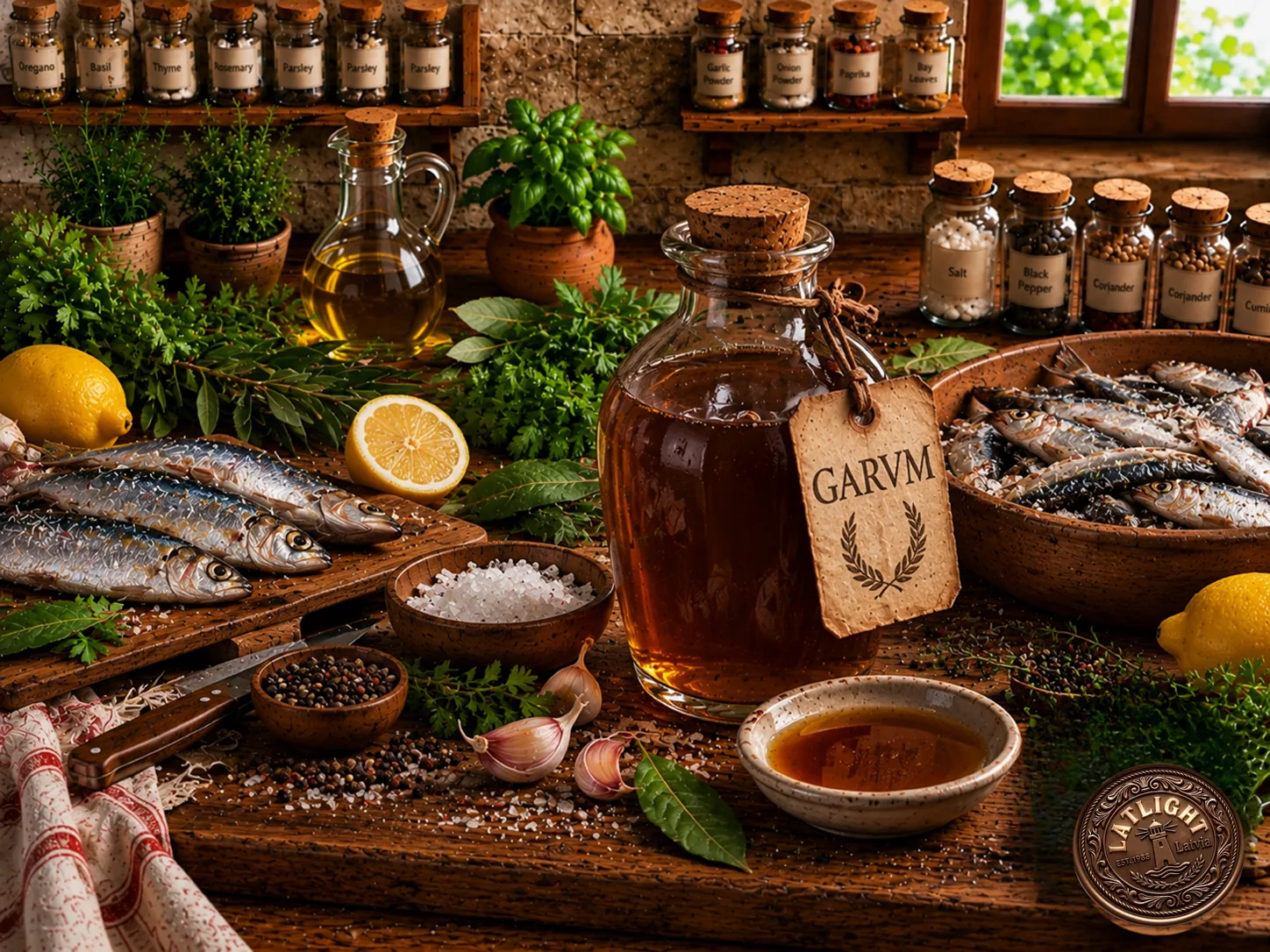
Garum: The Roman Fish Sauce (Quick Byzantine Method)
1. Make the brine: Warm the water in a pot and stir in the salt until it dissolves. Test it the Roman way: drop in a fresh raw egg in its shell. If it sinks, add more salt, a spoonful at a time, until the egg floats. Then take the egg out.
2. Prepare the fish: Rinse the sardines or anchovies. Leave them whole, with heads and insides, as the ancient recipe does (the insides give garum its depth), and cut each into 2–3 pieces.
3. Add the flavourings: Put the fish into the brine with the dried oregano, and the grape molasses (defrutum) if you are using it.
4. Cook: Bring to the boil, then simmer uncovered for about 30 minutes, until the fish has fallen apart and the liquid has reduced by about a third. Stir now and then and press the fish with a spoon.
5. Strain: Let it cool completely. Strain through a sieve lined with cheesecloth or a coffee filter. Strain it a second and a third time, until the liquid runs clear and amber.
6. Bottle and use: Pour into a clean bottle, seal and keep in the fridge for up to 2 months. Use a few drops instead of salt in stews, dressings and sauces, or mix it with olive oil (oleogarum) or wine (oenogarum), as the Romans did.
Garum, the sauce that seasoned Rome
History & OriginsGarum was the Roman Empire’s favourite seasoning: a clear, salty, amber sauce made from fermented fish. Romans used it the way we use salt or soy sauce, and it appears in almost every recipe in Apicius, the Roman cookbook. It was made in huge salting works on the coasts of Spain, Portugal, North Africa and Italy, and shipped across the empire in amphorae. In Pompeii, jars from the garum maker Aulus Umbricius Scaurus have been found with his name painted on them.
Classic garum took months. Small fish and fish insides were layered with salt and left in the sun for two to three months, then the clear liquid was drawn off. The fishy paste left at the bottom was called allec, and it was eaten too.
This recipe follows the quick method in the Geoponika, a Byzantine farming handbook from the 10th century that collected older Greek and Roman advice. For cooks who want garum at once, it says to test the brine with an egg, boil the fish in it with oregano, then strain it again and again until it runs clear. The result tastes much like Thai or Vietnamese fish sauce, its close modern cousin.
Garum, the sauce that seasoned Rome
The story behind the dishGarum was the Roman Empire’s favourite seasoning: a clear, salty, amber sauce made from fermented fish. Romans used it the way we use salt or soy sauce, and it appears in almost every recipe in Apicius, the Roman cookbook. It was made in huge salting works on the coasts of Spain, Portugal, North Africa and Italy, and shipped across the empire in amphorae. In Pompeii, jars from the garum maker Aulus Umbricius Scaurus have been found with his name painted on them.
Classic garum took months. Small fish and fish insides were layered with salt and left in the sun for two to three months, then the clear liquid was drawn off. The fishy paste left at the bottom was called allec, and it was eaten too.
This recipe follows the quick method in the Geoponika, a Byzantine farming handbook from the 10th century that collected older Greek and Roman advice. For cooks who want garum at once, it says to test the brine with an egg, boil the fish in it with oregano, then strain it again and again until it runs clear. The result tastes much like Thai or Vietnamese fish sauce, its close modern cousin.