GABA Oolong “Blue Peak”
GABA tea is a modern invention. It was developed in Japan in the 1980s by Dr Tsushida and colleagues at the national tea research institute, who found that…
- CuisineAsian
- Prep2 min
- Cook20 min
- Total22 min
- Makes1 pot
GABA Oolong “Blue Peak”
1. Warm the teaware: Rinse a 100–120 ml gaiwan or teapot and the cups with hot water, then pour it away.
2. Open the pearls: Add 6 g of tea, pour over water at 90–95 °C and pour it off after 5 seconds. The tightly rolled leaves need this rinse to start opening.
3. First infusions: Brew for 15 seconds, then 20, then 25. Look for the soft, velvety body and the notes of stewed apples.
4. Keep going: Add 5–10 seconds with each infusion as the leaves unfold. Expect 6–8 good infusions.
5. Western way: Use 4 g per 250 ml at 90–95 °C for 3 minutes. It also makes a smooth, malty cup when brewed a little longer.
GABA Oolong “Blue Peak”
History & OriginsGABA tea is a modern invention. It was developed in Japan in the 1980s by Dr Tsushida and colleagues at the national tea research institute, who found that fresh tea leaves kept for several hours in a sealed chamber filled with nitrogen, without oxygen, build up much more GABA (gamma-aminobutyric acid).
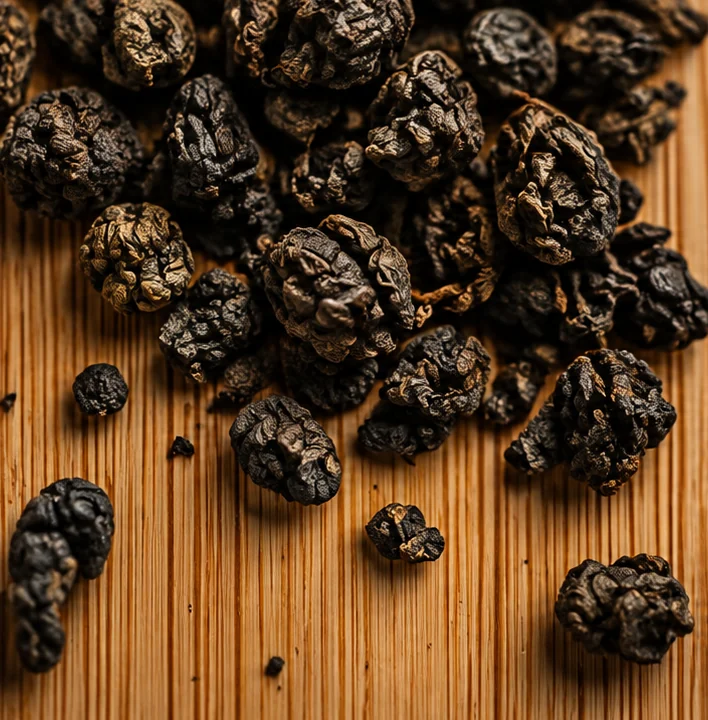
The method spread to Taiwan, where tea makers turned it into oolong: the leaves are rested in nitrogen, then oxidised, rolled into tight dark pearls and roasted. The result tastes quite unlike other oolongs: velvety and rounded, with notes of stewed apples and a gentle sourness.
That malty, bread-and-fruit character is why this one is often recommended to beer lovers. “Blue Peak” is the name of this particular tea.
GABA Oolong “Blue Peak”
The story behind the dishGABA tea is a modern invention. It was developed in Japan in the 1980s by Dr Tsushida and colleagues at the national tea research institute, who found that fresh tea leaves kept for several hours in a sealed chamber filled with nitrogen, without oxygen, build up much more GABA (gamma-aminobutyric acid).
The method spread to Taiwan, where tea makers turned it into oolong: the leaves are rested in nitrogen, then oxidised, rolled into tight dark pearls and roasted. The result tastes quite unlike other oolongs: velvety and rounded, with notes of stewed apples and a gentle sourness.
That malty, bread-and-fruit character is why this one is often recommended to beer lovers. “Blue Peak” is the name of this particular tea.