Libum
Libum is one of the oldest recipes written down in Latin. It appears around 160 BC in De Agri Cultura by Cato the Elder (chapter 75), a handbook for running…
- CuisineRoman
- Prep25 min
- Cook35 min
- Total1 h
- Makes4 servings
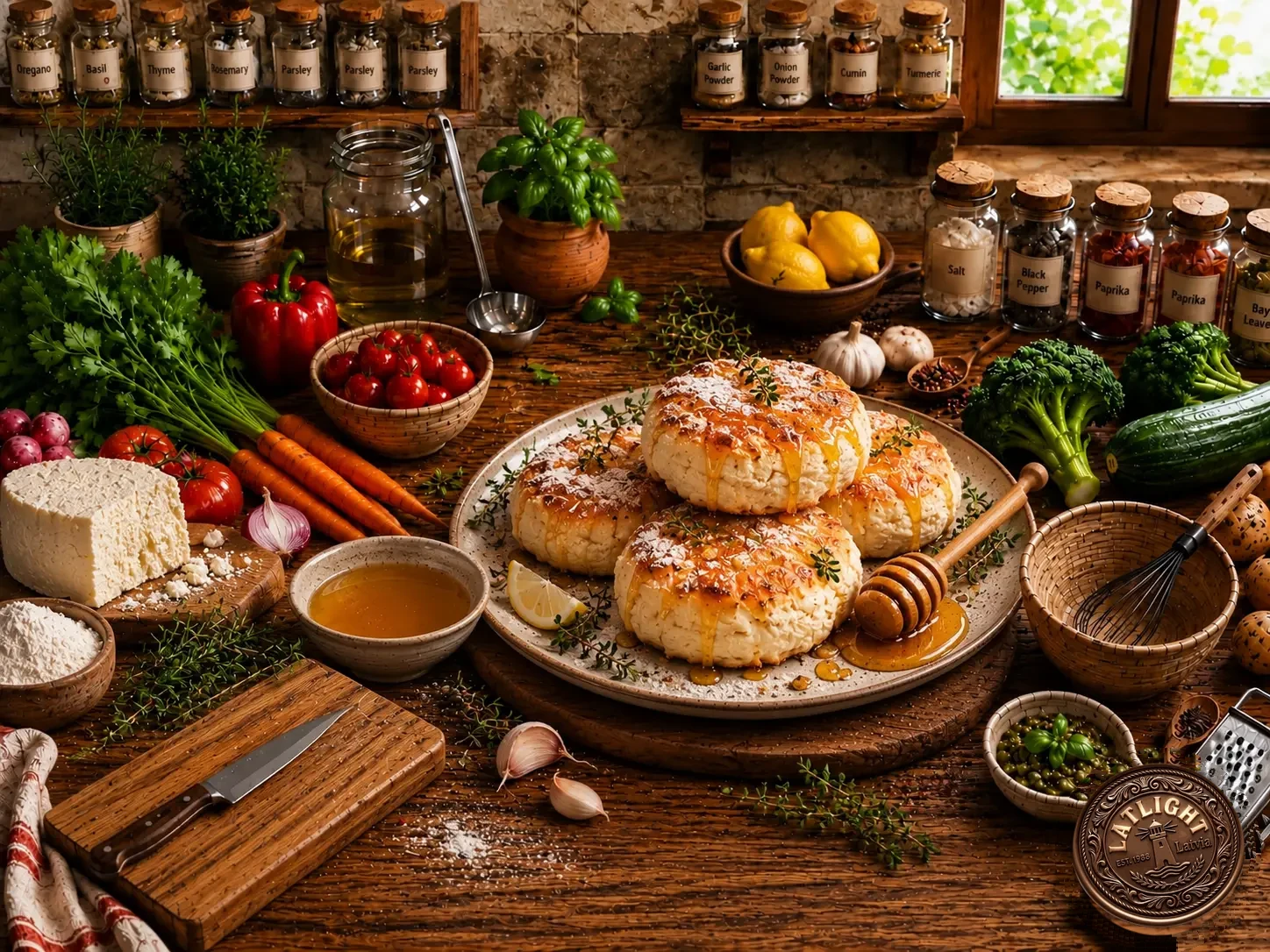
Libum
1. Make the dough:
Drain the ricotta well, then beat it until smooth. Mix in the egg, then work in the
flour with a spoon until you have a soft, slightly sticky dough.
2. Rest:
Cover and leave the dough for 15 minutes so the flour hydrates and it becomes
easier to shape.
3. Shape:
With floured hands divide the dough into 4 and form round, thick little loaves
about 8 cm wide.
4. Bay leaves:
Heat the oven to 180 °C. Lay the bay leaves on a baking tray and set each loaf on
two or three of them.
5. Bake:
Cover the tray loosely with foil, or an upturned ovenproof bowl, for the first
15 minutes, then uncover and bake for 15–20 minutes more, until golden and set.
6. Serve:
Warm the honey and brush it over the hot loaves, so they soak it up. Scatter with
pine nuts or poppy seeds if you like, and serve warm. Remove the bay leaves before eating.
Libum
History & OriginsLibum is one of the oldest recipes written down in Latin. It appears around 160 BC in De Agri Cultura by Cato the Elder (chapter 75), a handbook for running a Roman farm. Cato calls for two pounds of cheese, crushed in a mortar until soft, mixed with a pound of flour and one egg, then shaped into a loaf. The loaf is set on bay leaves and baked under a clay lid, the testu, over a hot hearth.
The name comes from libare, “to offer”. Libum was a sacrificial cake, given to the household gods, the Lares, and to deities at festivals and birthdays, and then shared by the family. Cato’s original has no honey; sweet versions came later, and honey is the natural Roman way to finish it. This Latlight version scales Cato’s proportions down to a single tray and uses ricotta, the closest modern relative of fresh Roman cheese.
Libum
The story behind the dishLibum is one of the oldest recipes written down in Latin. It appears around 160 BC in De Agri Cultura by Cato the Elder (chapter 75), a handbook for running a Roman farm. Cato calls for two pounds of cheese, crushed in a mortar until soft, mixed with a pound of flour and one egg, then shaped into a loaf. The loaf is set on bay leaves and baked under a clay lid, the testu, over a hot hearth.
The name comes from libare, “to offer”. Libum was a sacrificial cake, given to the household gods, the Lares, and to deities at festivals and birthdays, and then shared by the family. Cato’s original has no honey; sweet versions came later, and honey is the natural Roman way to finish it. This Latlight version scales Cato’s proportions down to a single tray and uses ricotta, the closest modern relative of fresh Roman cheese.